
This is the 2nd part of the series
Research and development (R&D) in the pharmaceutical industry is the key driver in developing and pushing new medical advances to market. Life science organizations invest billions of dollars yearly in R&D, a figure that’s exploded over the past few years due to the pandemic.
On average, it takes at least ten years for a new medicine to complete the journey from initial discovery to the marketplace, with clinical trials alone taking six to seven years on average. The average cost to research and develop each successful drug is estimated to be $2.6 billion. This number incorporates the cost of failures — of the thousands and sometimes millions of compounds that may be screened and assessed early in the R&D process, only a few of which will ultimately receive approval. The overall probability of clinical success (the likelihood that a drug entering clinical testing will eventually be approved) is estimated to be less than 12%.
Several factors influence spending on R&D by drug companies, and these decisions typically revolve around three primary considerations:
1. Projected lifetime global revenues generated by a new drug. 2. Anticipated expenses associated with the development of a new drug. 3. The impact of policies and programs that shape the supply of and demand for prescription medications.
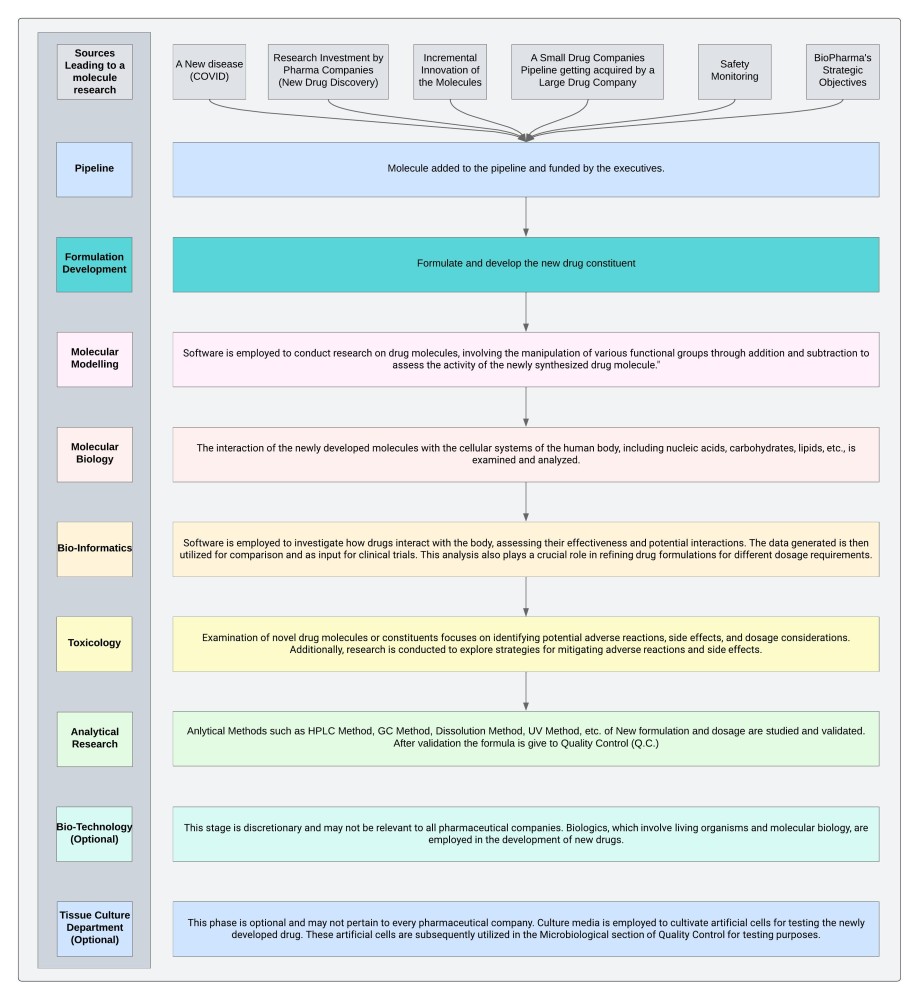
Understanding the intricacies of R&D within an article can be challenging, which is why I attempted to encapsulate the various stages and their corresponding key activities in the following diagram. This visual representation aims to provide a broad overview of the Research & Development journey in pharmaceutical companies.

Further Reading:
phrma-docs.phrma.org/sites/default/files/pdf/rd_brochure_022307.pdf
Pharma R&D Process: A Complete Breakdown | Within3

 Krishna Avva's Cogitations